Account A
Net Deal Value£500,000
Probability of winning3 in 10
Expected value£150,000
Hours to a decision49
About £3,000value per hour
The DIAMOND Framework, by ZINT
The DIAMOND Framework is a method for choosing which accounts a sales team pursues, before anyone picks up the phone. It scores each account on seven factors and ranks the list by what an hour of selling is worth.
ZINT publishes the method for anyone to use.
A weighted forecast runs on stage reached, meetings held and budget confirmed. Each of those is produced by working the account. So the forecast only speaks after a seller has given the account weeks of work.
DIAMOND asks the earlier question. Which accounts are we working on?
‘The idea underneath this book is not mine and it is not new.’
Josh Bowyer opens Winnable by crediting weighted forecasting, one of the oldest tools in sales management. DIAMOND applies the same discipline before first contact.
PUBLISHED · Josh Bowyer · Winnable, prologue
Why seven? A CRM can fold forty signals into one number, and nobody can say why the number is what it is. Seven factors can be read, argued with and corrected.
PUBLISHED · Josh Bowyer · Winnable, chapter three
Six factors give a probability of winning. Net Deal Value gives a figure in pounds. The probability is multiplied by the value, then divided by the hours the pursuit will cost.
Net Deal Valueprobability of winninghoursvalue per hour
About £3,000value per hour
About £6,000value per hour
Account B is a tenth of the size and worth twice as much for each hour. A warm route in and a small buying group did that. Three things come out: a rank, a tier and a rounded value per hour.
ILLUSTRATION · Josh Bowyer · Winnable, chapter four
A named owner, contact across the buying group and bespoke research
5 to 12 for each seller
A shared owner, and content written for a cluster of similar accounts
25 to 60 for each seller
Automated watching, with a person stepping in when a signal fires
No fixed limit
Close to nothing, until a trigger promotes it
Most of the market
The tier boundaries sit at your capacity line. Pursue holds what your sellers can work properly, and no more.
PUBLISHED · Josh Bowyer · Winnable, chapter eleven
The missing layer in your revenue architecture
MEDDIC, SPIN and Challenger are very good at what they were built for. They start after first contact. DIAMOND sits before them and decides which accounts they are applied to.
Before the pipeline
DIAMOND
Which accounts should we pursue?
First engagement
Challenger, SPIN
How do we create and lead the conversation?
In the pipeline
MEDDIC, MEDDPICC
Is this deal qualified to win?
After the close
Customer success
How do we retain and expand?
PUBLISHED · Josh Bowyer · Winnable, chapter three
50
dials for one meeting, before
13
dials for one meeting, after
ZINT’s own sales team moved from one meeting for every 50 dials to one for every 13. That is nearly four times.
REPORTED · ZINT sales team · Winnable, chapter eleven
ZINT scores accounts with the DIAMOND Framework. The public evidence comes from ZINT: filed accounts, registers, websites and news for every active UK company. Your CRM adds your own history with each account.
TO CONFIRM · What a customer sees of DIAMOND in the product at launch
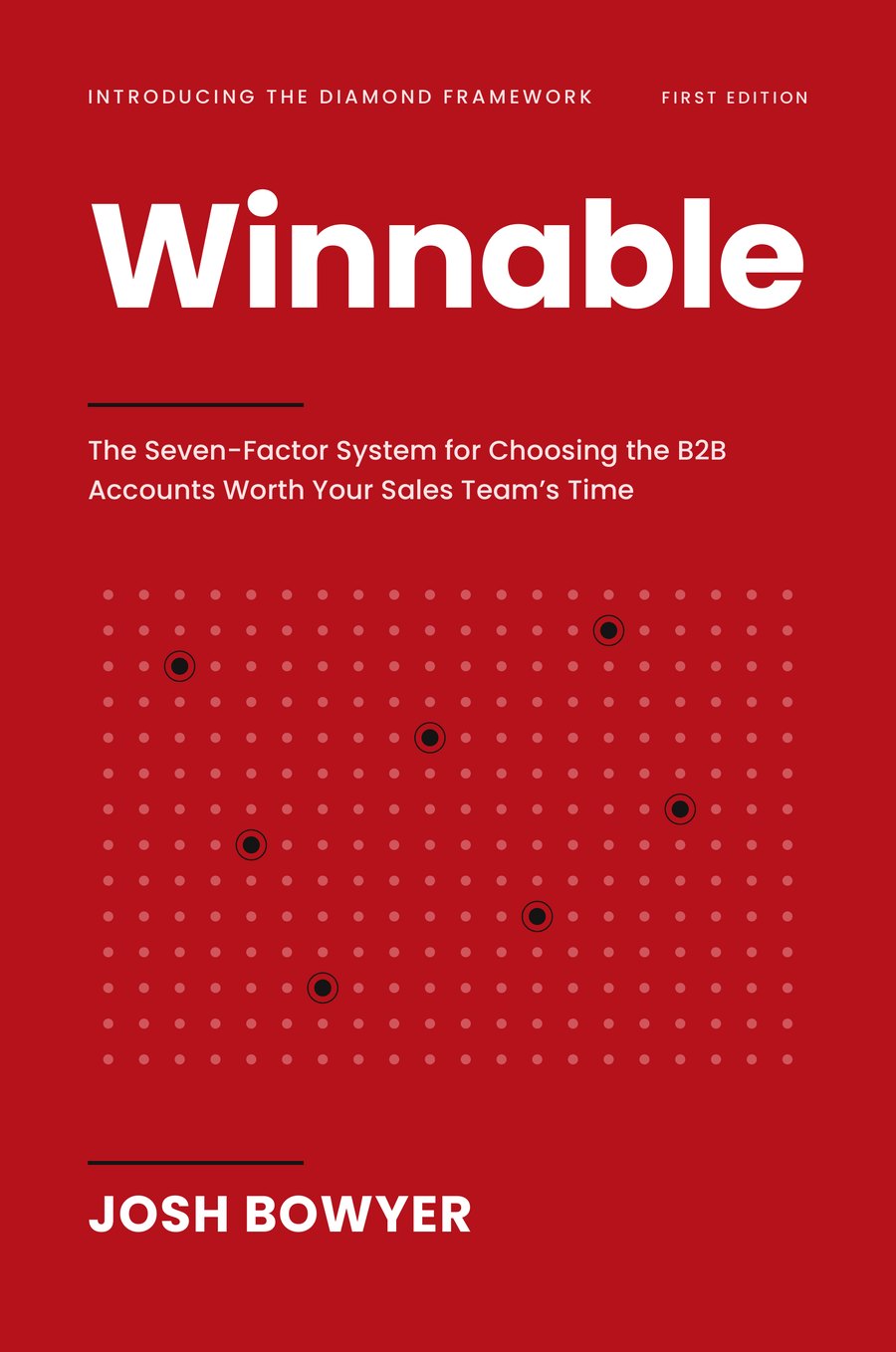
Winnable, by Josh Bowyer, sets the method out in full. It gives a chapter to each factor, and one to turning seven scores into one decision.
A method for choosing which accounts a sales team should pursue, before first contact. It scores each account on seven factors and ranks the list by value per hour of selling.
Net Deal Value, Intent, Alignment, Motivation, Opportunity, Network and Decision Maker Access.
No. The method is published for anyone to use. ZINT supplies the public evidence for it across every active UK company.
A lead score folds dozens of signals into one number. DIAMOND sorts the same signals into seven factors, so a seller can see which factor is weak and act on it.
No. It sits before them and decides which accounts they are applied to.
Pursue, Develop, Monitor and Park. The boundaries are set by how many accounts your sellers can work properly.
In Winnable, by Josh Bowyer. Order a free copy, and it usually ships within 5 working days.
Tell us what you sell and to whom. In a 20-minute call, we will show you how many UK companies fit, which ones lead the list, and the filing behind each.